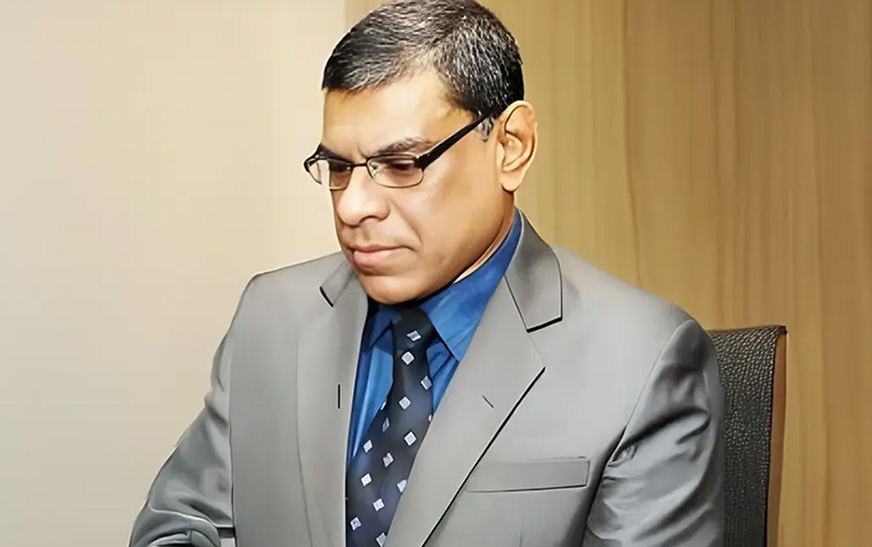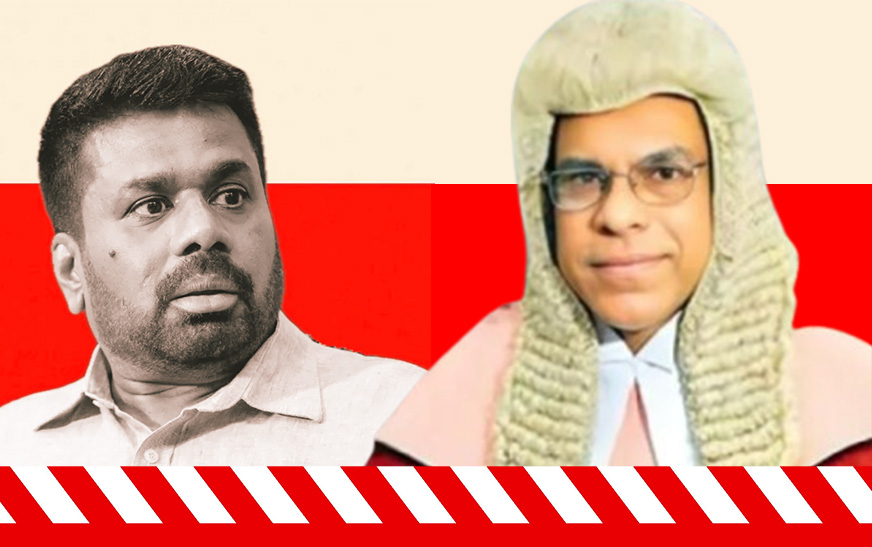
Every nation gets the judiciary it tolerates, not the one it deserves. For twenty two million Sri Lankans, the next few months will determine whether our Republic remains a functioning democracy or descends into a judicial oligarchy where one man’s ambition overrides decades of constitutional tradition. Chief Justice Preethi Padman Surasena, whose term is lawfully scheduled to end in December 2026, has reportedly requested a two year extension from the President. Never in the long proud history of the Sri Lankan judiciary has a sitting justice, let alone a Chief Justice, asked for or been granted an extension. Not under the Soulbury Constitution, not under the 1978 Constitution, not during the darkest days of the insurrections or the civil war. Why now, and why this Chief Justice?
The analysis that follows is not speculative alarmism. It is a clinical diagnosis of a system in advanced decay. When the head of the judiciary is himself the subject of multiple credible allegations, including past mental incapacity, allegiance to a non traditional religious group often locally referred to as a cult, and a political pact to immunize the ruling class while prosecuting the opposition, the three pillars of judicial independence shatter simultaneously. The judiciary relies entirely on its perceived neutrality, intellectual rigor, and institutional autonomy to function effectively. A court order is obeyed not because a judge holds a gun but because the citizen believes the judge is neutral. If the Chief Justice is perceived as a man who secured his position through a broken Constitutional Council where the opposition failed its veto duty and now seeks to extend his tenure through personal lobbying rather than constitutional process, then every judgment he has ever authored becomes suspect. Every injunction, every criminal acquittal, every contempt ruling carries the stench of a pre negotiated outcome.
We are already witnessing top down administrative restructuring that bypasses seniority. Judges who wish to rise know exactly which ideological signals to send. This is not conjecture but the lived reality of a bench where loyalists are fast tracked and independent voices are marginalized. When the Chief Justice himself breaks convention to cling to power, what message does that send to a district judge who must rule against a minister tomorrow? Under this tenure, we have seen the aggressive prosecution of opposition figures while ruling party members implicated in ongoing corruption cases walk free. A compromised Chief Justice does not merely fail to stop this but actively enables it. The judiciary has morphed from the shield of the weak into the sword of the powerful.
Let us now turn to the constitutional absurdity of a personal request. The retirement age for Supreme Court justices is sixty five years, subject to subsequent amendments, but an extension, a discretionary extra constitutional grant of additional years beyond the statutory limit or beyond the natural expiration of a fixed term, has no textual basis in Article 107 or any other provision of the Constitution. The President is the custodian of the executive, not the monarch who dispenses judicial tenure as royal favour. If the President grants this extension, he does so in violation of the principle of separation of powers by treating judicial office as an executive concession, the rule against post retirement service for superior court judges which is a bedrock convention inherited from English common law and uninterrupted in Sri Lankan practice, the mandate of the Constitutional Council which was bypassed entirely in this personal request, and the fundamental expectation of fixed predictable judicial terms without which judicial independence becomes judicial servitude. To grant this extension is to declare that the Constitution is a menu of suggestions, not a binding contract between the state and the people.
Sri Lanka is a pluralistic society that accords Buddhism the foremost place while guaranteeing rights to all faiths. Allegations that the Chief Justice is guided by a non traditional Christian movement are not an attack on religious freedom but an attack on transparency. A judge’s private faith is his own, but when credible evidence suggests that judicial decisions are being shaped by an esoteric religious hierarchy, when the Chief Justice’s public statements and case management mirror the directives of an unaccountable religious mentor, the line between conscience and conflict collapses. Already the Buddhist clergy, who command immense moral authority across this land, are stirring. If this extension is granted, legal critique will escalate into ethno religious mobilisation. The state will be consumed by a distraction it cannot afford while the economy lies in tatters and the people cry for justice.
Every political transition brings demands for accountability. But when the executive, a compliant Constitutional Council, and a compromised Chief Justice form an unholy trinity, due process becomes a theatre of the absurd. We have reached a point where the opposition sees its leaders arrested on stretched charges, the ruling class sees its corruption cases mysteriously adjourned until the statute of limitations expires or witnesses recant, and the citizen watches live broadcasts of court proceedings and feels only despair. Foreign investors are already taking note. International human rights mechanisms are circulating confidential memos with the phrase systemic rule of law backsliding. Civil society organisations are preparing urgent submissions to the United Nations Special Rapporteur on the Independence of Judges and Lawyers. This is not justice. This is a Potemkin judiciary.
To the Honourable President in your capacity as the elected custodian of twenty two million souls, you have the power to refuse this request. You have the duty to protect the Constitution from those who would bend it for personal gain. By denying Chief Justice Surasena’s unprecedented demand for a two year extension, you will reaffirm that judicial tenure is fixed by law not by lobbying, send a signal to the lower judiciary that no one is above constitutional convention, prevent the final collapse of public trust in the Supreme Court, avoid a catastrophic clash with the Buddhist clergy and other religious communities, and give Parliament the opportunity to appoint a new Chief Justice through the proper Constitutional Council process, a Chief Justice with unblemished integrity and no scent of a political pact. If, on the other hand, you grant this extension, history will record that you were the President who legalised judicial authoritarianism. You will own every politically motivated verdict delivered by an extended Surasena court. You will own the civil unrest that follows. And you will answer to a generation of Sri Lankans who will inherit a broken legal system.
This article is not written in malice. It is written in the tradition of the social justice warriors who speaks truth to power and the warrior for freedom who refuses to watch the courthouse gates close on the poor, the opposition, and the truthful. The Surasena extension is not a routine administrative matter. It is the watershed moment that will define whether Sri Lanka remains a republic of laws or becomes a republic of men. Silence from the bar, from civil society, from the clergy, from the press is complicity. I call upon the President to reject this request immediately and publicly. I call upon the Constitutional Council to issue a statement reaffirming that no mechanism for such an extension exists. I call upon the people, the ultimate sovereigns, to raise their voices in every forum until this unconstitutional thirst for power is extinguished. Do not let one man’s ambition burn down the temple of justice.
(Author unknown)